
Bottom line: Despite the challenges, Ukrainian forces continue to hold Russian forces to incremental gains, extracting a steep price for territorial gains. Drone units are a key part of the solution, but by themselves may not be sufficient to stabilize the front. 34/
Full-scale invasion and national resilience, broadcasted live.
-
Immersion of arms shipments and Russian economic slowdown
Russia continues to receive large volumes of artillery ammunition from DPRK, and artillery systems, while being supported by China. Yet its economy is slowing down, and the increased rate of manpower losses has forced a postponement of force expansion plans in 2025. 33/
-
Ukraine restructures its military command
Ukraine is finally eliminating the OTU and TG command layers, which did little beyond attempting to micromanage brigades and assigning unrealistic combat tasks. Corps will now take over, organized under two Joint Task Forces (East and North) reporting to the OSUV.
-
Ukraine: Reorganization of drone forces under Robert Brovdi
Ukraine’s Unmanned Systems Forces are now led by Robert Brovdi, head of Madyar, and are launching plans that will better integrate and systematize drone employment. These hold promise as Ukrainian drone employment needs to evolve to stay ahead. 27/
-
Ukraine scales drone interceptors against Russian strikes
There has been an exponential increase in Russian drone & missile strikes against Ukrainian infrastructure. However, Ukraine is rapidly scaling up use of drone-based interceptors, paired with light radars. 25/
-
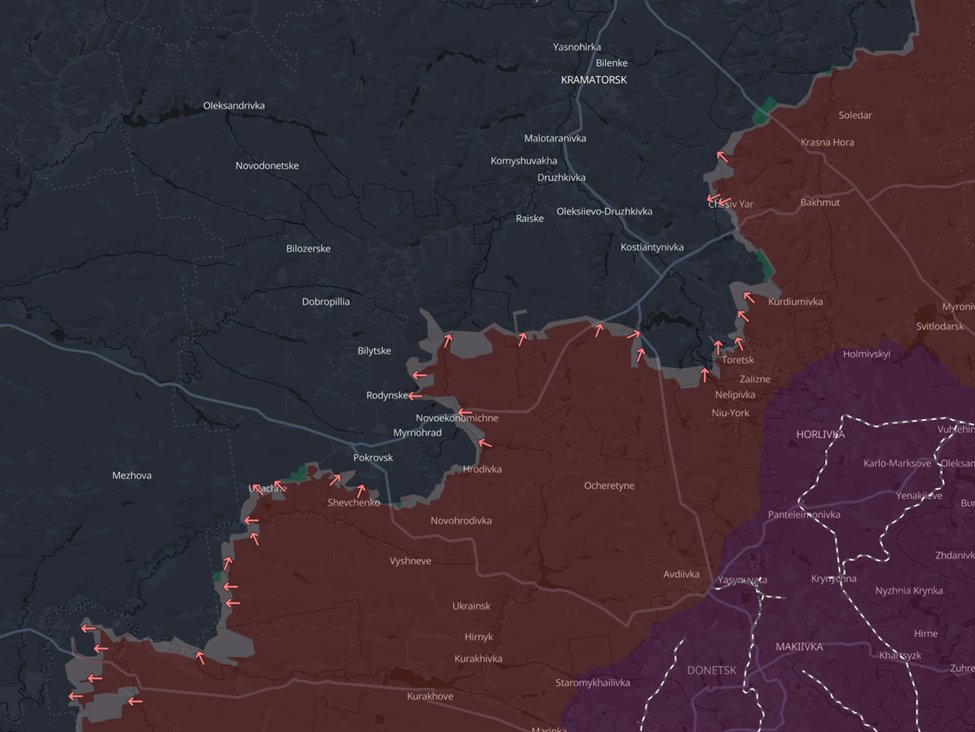
Ukrainian pocket: hard stabilization, Russian drones target logistics
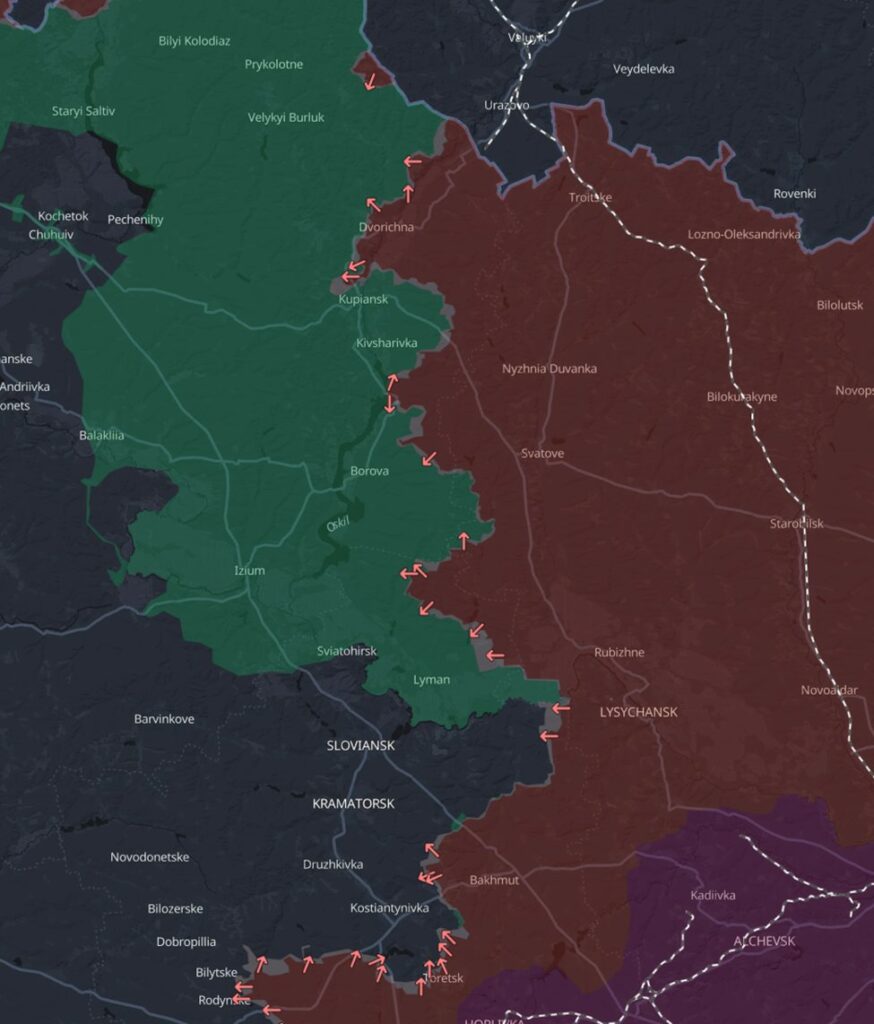
Ukrainian forces are increasingly defending in salient positions, with Russian drone units working to constrain logistical supply to these areas in an effort to collapse the pockets. Hence the geometry of the battlefield lends itself poorly to stabilization. 22/ (DeepStateMap)
-
AFU forced to hold untenable positions instead of mobile defense
The main culprit is a policy to hold onto every meter, even when in near envelopment, or in disadvantageous terrain. Rather than trading space for attrition, or conducting a mobile defense, AFU commanders are forced to try and hold onto untenable positions. 23/
-
Drones and Artillery in Modern Conflicts
Focusing too much on drones overlooks that the current dynamic stems from a combination of mining, drone use, and traditional artillery fire. Therefore, ensuring an adequate supply of artillery and mortar munitions remains crucial, even as drones handle much of the burden.
-
Ukrainian fortifications often unused and vulnerable
Although there is great work done detailing Ukrainian fortifications, most of the observed positions are constructed in the open and will never be occupied by units. They are easily targeted and destroyed. Ukraine lacks infantry to man most of them in the first place. 16/
-
Guerre moderne : tactiques de positions fortifiées
This is not a war of trenches. It is a war of individual fighting positions, fortified and well masked units in tree lines, buildings, basements, or in dense forests. Occupying fortifications in the open is usually considered suicidal by troops. 17/